From Stockouts to Reliable Inventory
A Shopify store needed to spot stock risk early, before shortages turned into lost orders and customer problems.
The Result Summarized
- 📦 Real-time visibility into stock levels across all variants
- ❌ Eliminated manual stock tracking, guesswork, and conflicting counts
- ⚠️ Automatic low-stock, critical-stock, and out-of-stock notifications
- 📨 Draft restock emails generated automatically per variant
- 🧮 Stock calculated against open orders, not just physical units
- 🖥️ Centralized UI to view, adjust, and restock inventory with confidence
The Problem
This was a made-to-order e-commerce store. Real inventory. Real constraints. No dropshipping safety net.
Stock was tracked manually — inconsistently. Sometimes in someone’s head. Sometimes on paper.
Sometimes not at all. When volume was low, they got away with it.
When Q4 hit, it collapsed.
No one knew which variants were actually in stock. No one knew which units were already “reserved” by existing orders.
Fulfillment pulled items that should have gone to other orders. Operations couldn’t answer the simplest question: do we have enough to finish what we sold?

The hidden cost of staying manual
Manual stock tracking doesn’t just cause mistakes. It compounds them.
Every wrong pick forces a reshuffle.
Every missed restock delays multiple orders.
Every unclear count creates internal arguments instead of decisions.
And the most dangerous part: problems show up after damage is done — when orders are late, customers are angry, and production is scrambling.
And the riskiest part: the spreadsheet looks accurate until it isn’t. By the time you notice, you’re already late, apologizing, or reworking damaged orders without knowing why they happened.
At scale, “we’ll double-check” stops working. The cost isn’t just lost time. It’s lost confidence across the team.
What the automation actually does
This system replaced assumptions with a single source of truth.
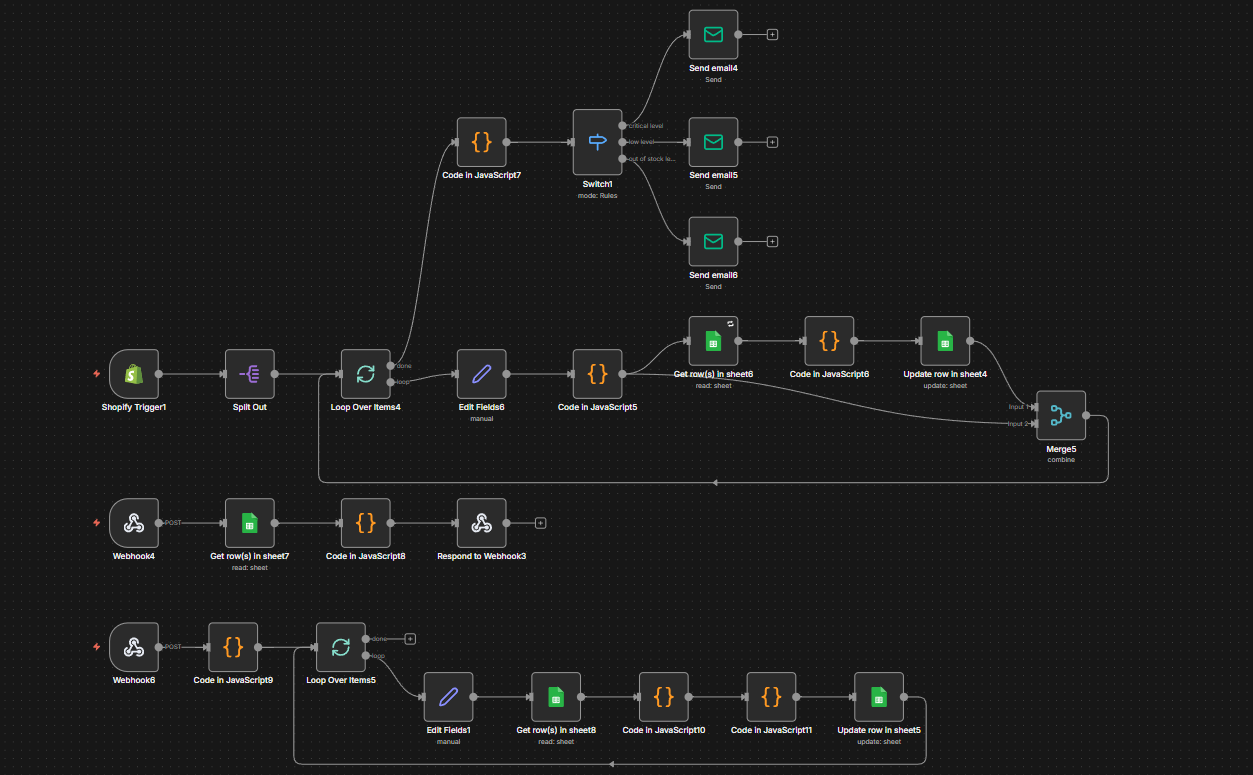
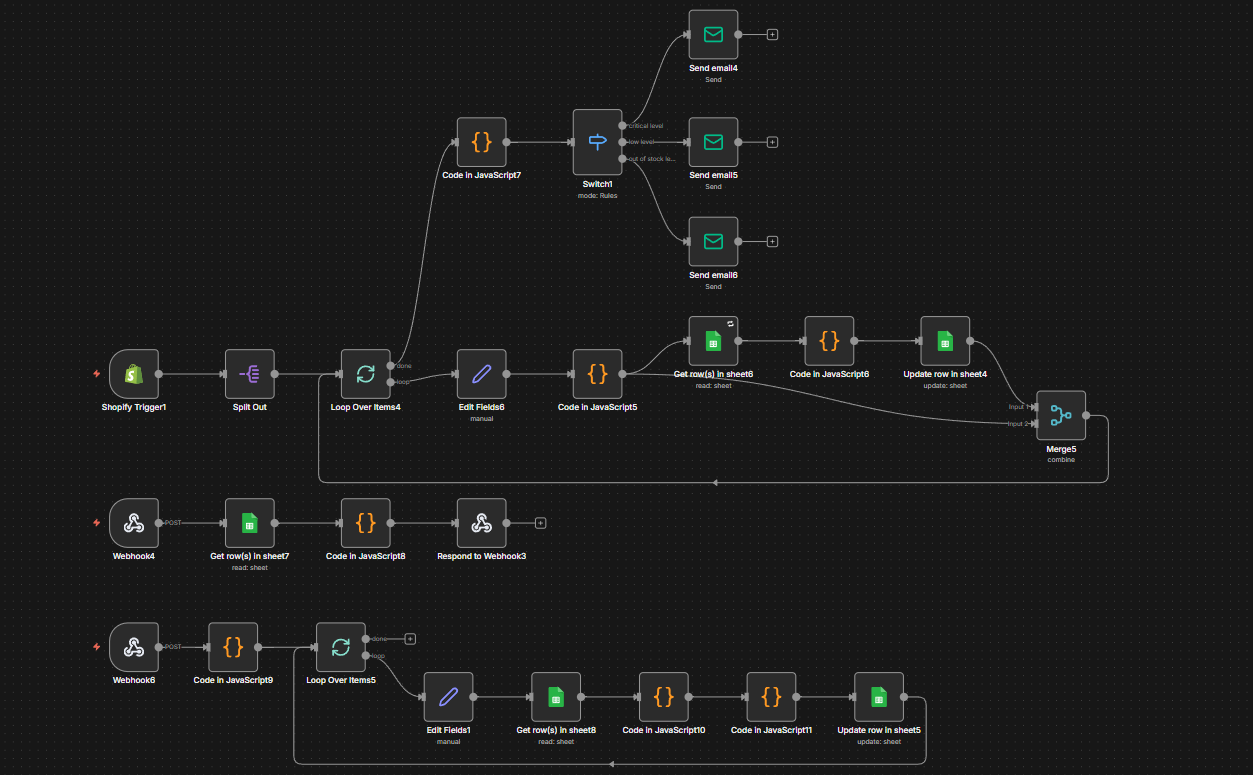
First, all variant stock was centralized into one database — pulling from Shopify where possible and from physical warehouse counts where needed.
- From there:
- Every new Shopify order automatically reduces stock for the exact variants sold
- Stock is calculated against open orders, not just raw quantities
- The system knows what’s left after fulfillment obligations, not just what’s on the shelf
- On top of that, guardrails were added:
- When a variant drops below a warning threshold (e.g. under 5 units), the relevant team is notified
- When it drops lower (e.g. under 3), escalation notifications are sent
- When stock hits zero, another alert fires — no surprises, no silent failures
- At the same time, the system prepares the next action:
- A draft restock email is automatically created for the supplier
- The team only needs to enter the desired restock quantity and send it
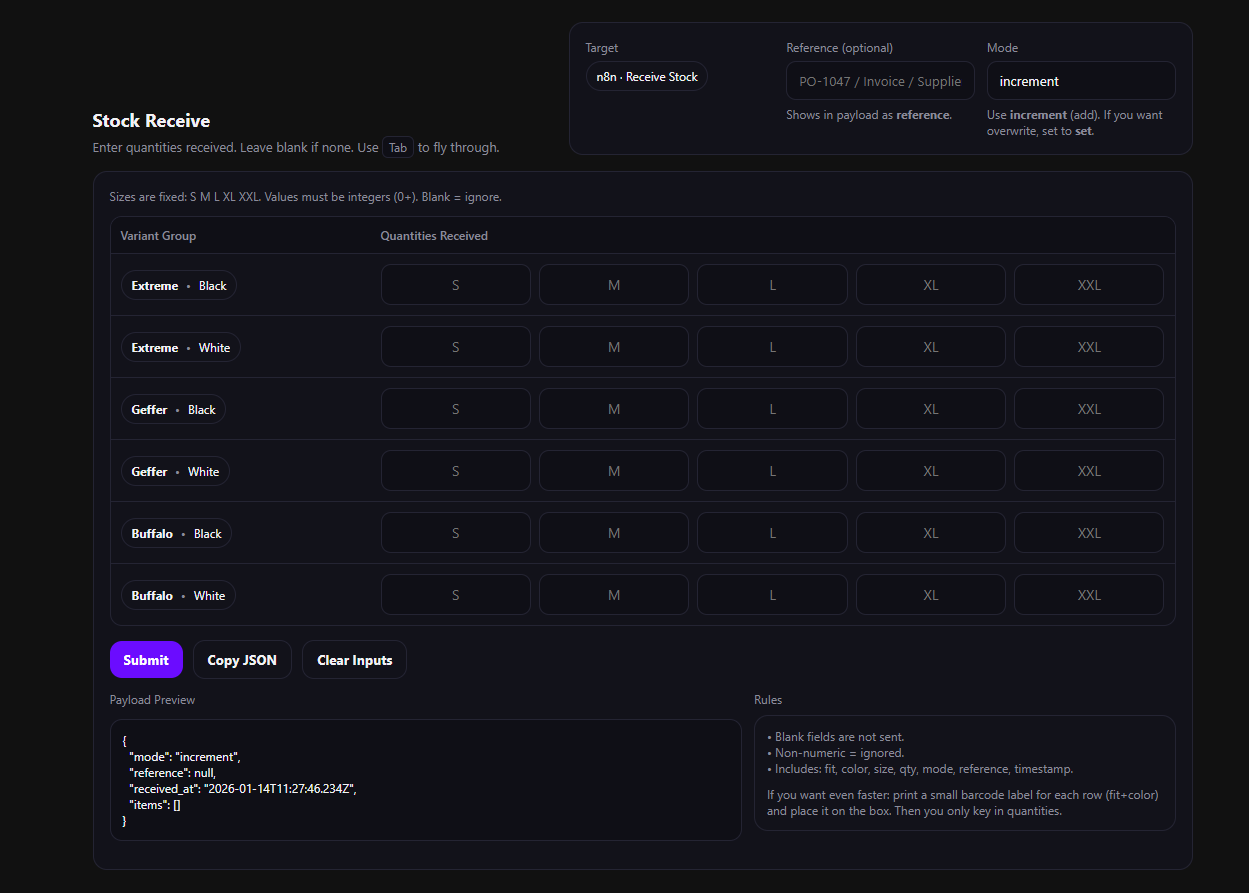
- When new stock arrives, the process doesn’t break:
- The team counts incoming units
- Inputs them into a dedicated restock UI
- Quantities are added to the live stock, accounting for existing orders
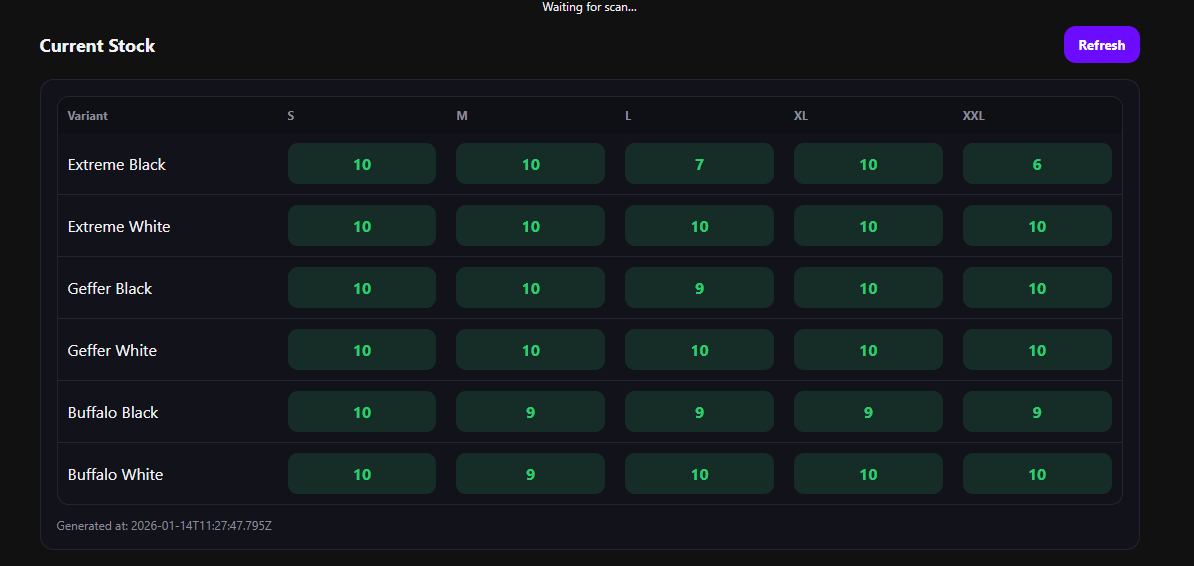
- The dashboard updates instantly
No spreadsheets to reconcile. No mental math. No “I think we’re okay.”

What changed operationally
Stock stopped being a discussion and became a fact.
The team now sees:
- Every variant, in one place
- How much is available right now
- How much is already allocated to orders
- Which variants are approaching risk thresholds
Restocking is no longer reactive. It’s prompted, structured, and visible.
Fulfillment knows what can be picked without conflict.
Operations knows where the next bottleneck will be.
Management knows whether sales volume is actually supportable.
Most importantly: chaos during peak volume stopped being normal.
Optional technical context (skippable)
Behind the scenes, this connects Shopify order triggers with a centralized stock database, threshold-based notifications, a lightweight internal UI for restocks, and automated draft emails. No complex tools for staff. No manual reconciliation loops.
Does This Process Feel Familiar?
- If you're:
- Tracking stock in multiple places
- Relying on people to “remember” what’s allocated
- Discovering stockouts only after orders are placed
- Scaling sales without real-time inventory clarity
You have a system that doesn’t protect you.
Takeaway
This automation didn’t increase sales. It made sales safe.
It removed uncertainty from one of the most fragile parts of the operation. And once stock became reliable, everything downstream — fulfillment, support, planning — stabilized.
That’s what good automation does.
Not flashy. Just unforgivingly accurate.
Not Sure What to
Automate First?
Show us where work feels slow, repetitive, or fragile. We will help you identify the strongest first automation opportunity.