From Status Chasing to Live Visibility
A made-to-order Shopify store needed every team to see current order status without chasing updates or relying on memory.
The Result Summarized
- 📄 Every order now has an auto-generated packing slip with clear production status
- 🔍 Real-time visibility into where each order is — production, ready, blocked, or failed
- ❌ Eliminated manual spreadsheet updates and status guesswork
- 📡 Carrier scheduling is notified automatically when order status changes
- 🧠 Customer support answers order questions instantly, without checking multiple tools
- ⚠️ Production issues (out-of-stock, damaged items) are logged explicitly, not discovered late
The Problem
Before this automation, order status lived in someone’s head — and a spreadsheet.
This store makes products to order. No dropshipping. Real production steps. Real delays. Real mistakes.
Every order moved through production, pickup, exceptions, and damage handling — but the status was updated manually in a spreadsheet. Someone had to remember to change it. Someone had to be right every time. Someone had to answer “where is my order?” with partial information.
That works at low volume. It breaks quietly as volume grows.
Not with a crash. With confusion.

The hidden cost of staying manual
Manual status tracking doesn’t just waste time. It creates blind spots.
Production doesn’t know what’s urgent.
Operations can’t see bottlenecks in real time.
Customer support answers questions with stale data.
Carrier scheduling reacts late instead of planning ahead.
And the riskiest part: the spreadsheet looks accurate until it isn’t. By the time you notice, you’re already late, apologizing, or reworking damaged orders without knowing why they happened.
This is how operational debt accumulates — silently.
What the automation actually changed
The automation didn’t “optimize workflows.” It removed human memory from the critical path.
- Here’s what now happens:
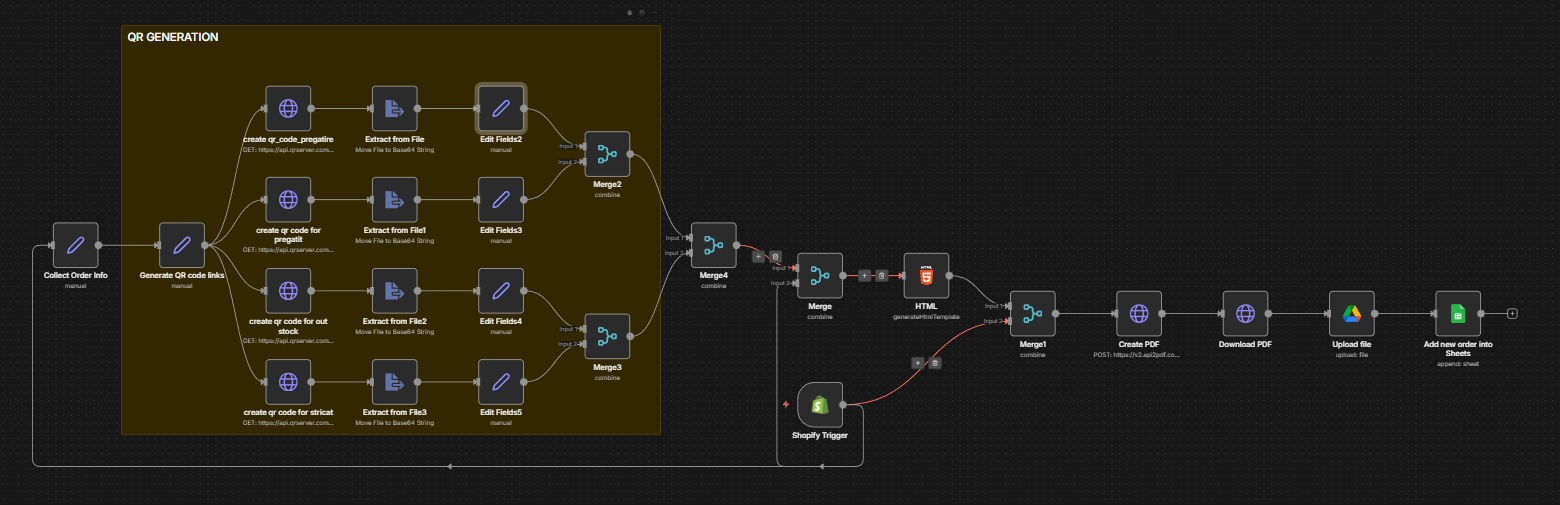
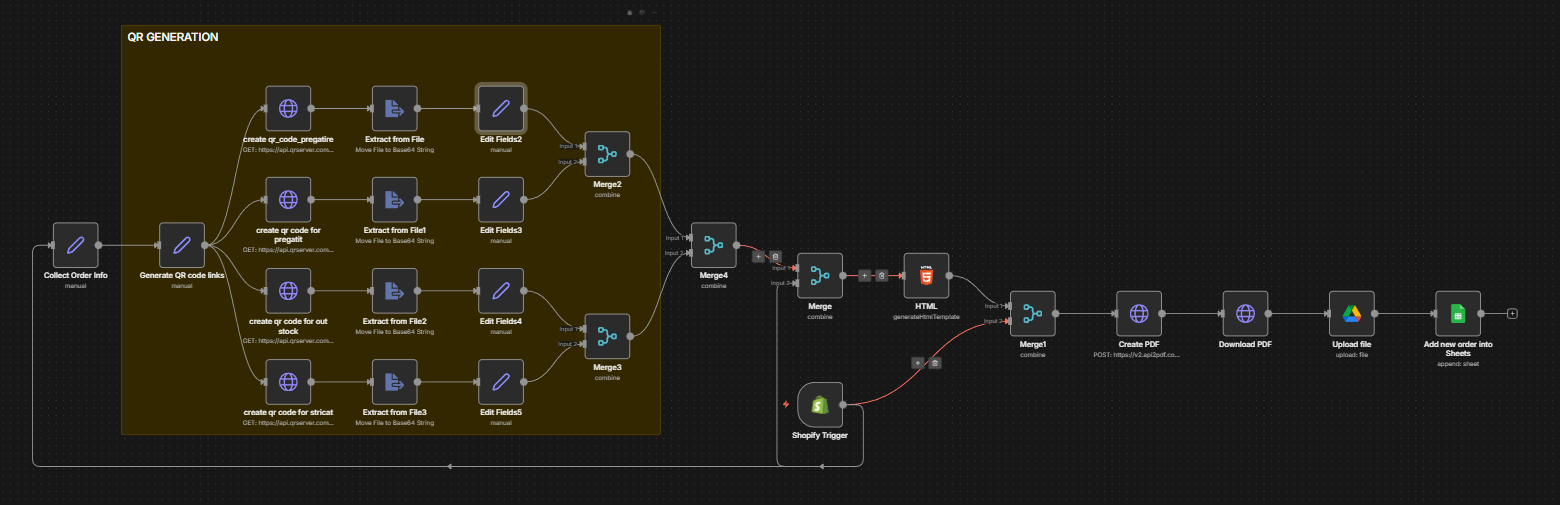
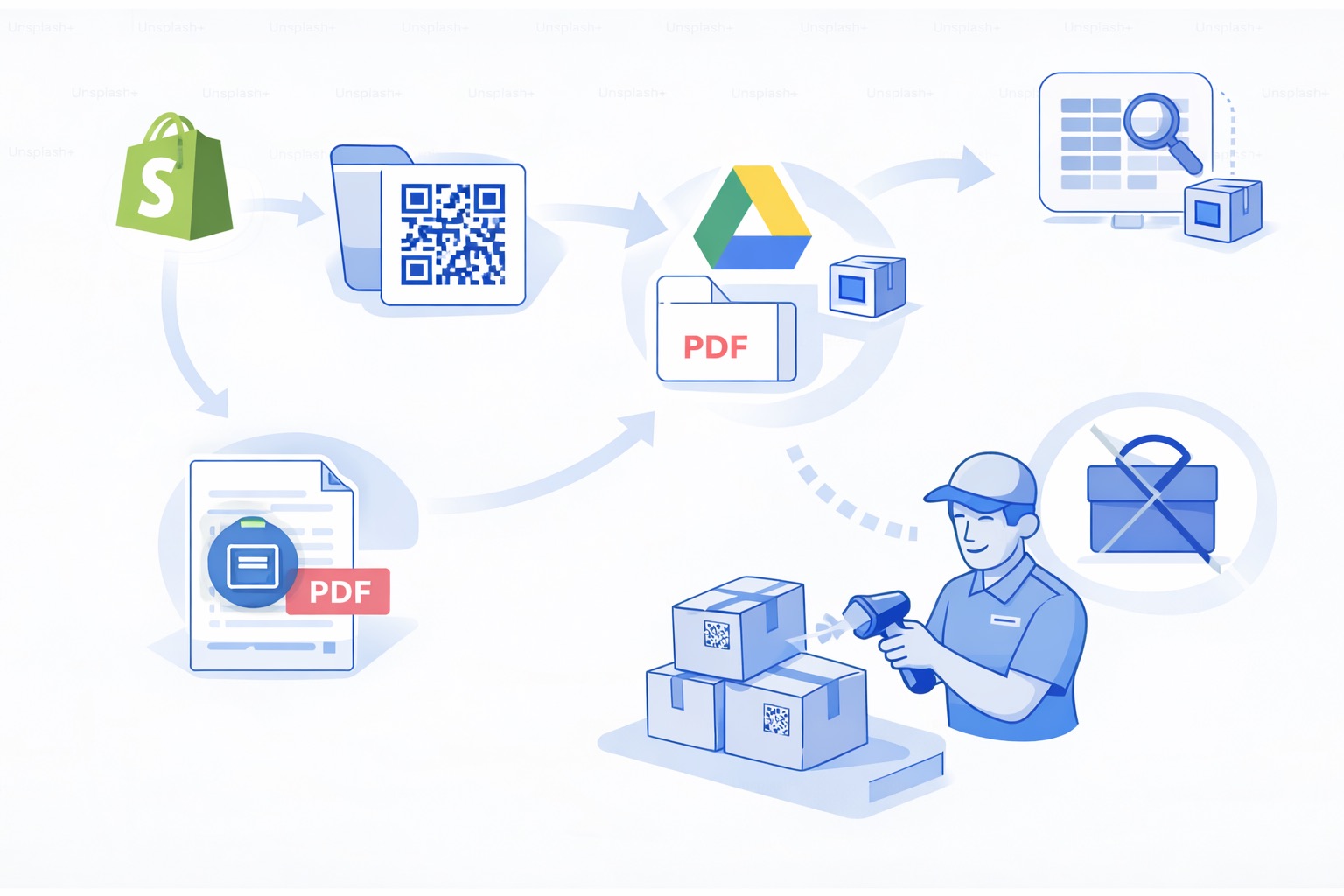
- A new Shopify order triggers the system automatically.
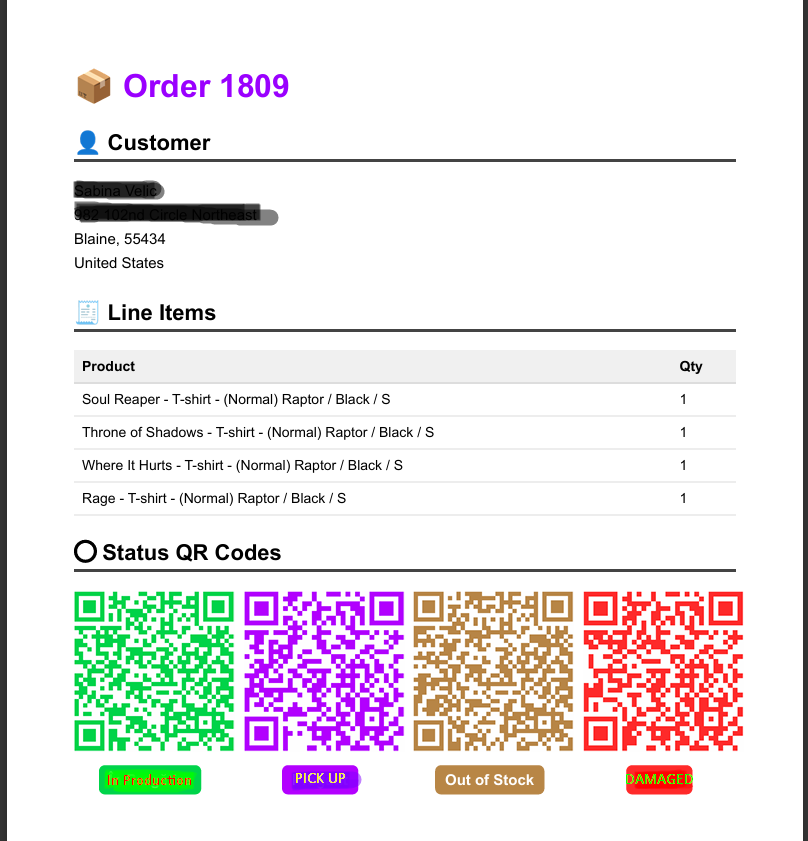
- A packing slip PDF is generated for that specific order.
- The PDF includes:
- Ordered items
- Shipping country
- Four unique QR codes, each representing a production status:
- In production
- Ready for pickup
- Out-of-stock components
- Damaged during production
- The PDF is uploaded to Google Drive and printed or accessed by the production team.
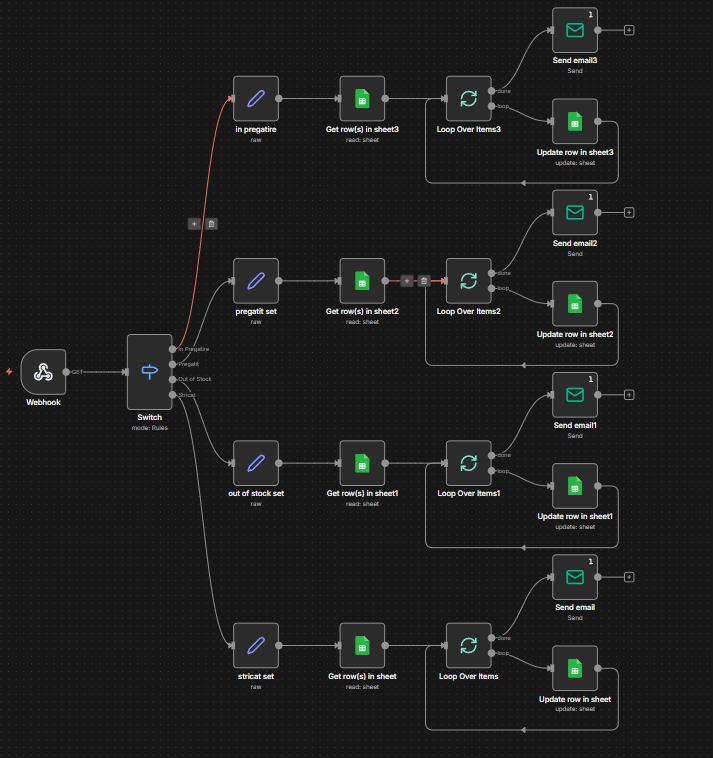
- As the order moves through production, the team scans the relevant QR code.
- Each scan updates the central spreadsheet instantly and notifies the carrier scheduler when relevant.
No typing. No remembering. No “I’ll update it later.”
The physical flow and the digital truth are now the same thing.
What this unlocked operationally
This wasn’t about speed. It was about control.
At any moment, the spreadsheet shows:
- Which orders are actively in production
- Which are blocked by missing components
- Which are ready for pickup
- Which failed quality control and why
Customer support no longer guesses. Operations no longer chase updates. Production doesn’t need to explain itself verbally.
When someone asks, “What’s happening with order #X?”, the answer exists before the question.
Just as important: exceptions stopped being invisible. Damaged items and stock issues are now explicit states, not side conversations.
Why this matters more than it sounds
Made-to-order businesses live or die on coordination. When status tracking is manual, scale increases stress linearly — or worse.
This automation didn’t add complexity. It removed it.
Instead of one fragile spreadsheet depending on discipline, the system now enforces reality. If an order exists physically, it has a digital state. If it changes physically, the state changes with it.
That’s the difference between “we think this is right” and “we know.”
Optional technical context (skippable)
For those who care: the system connects Shopify order triggers with QR generation, PDF creation, and Google Drive storage.
Status scans act as structured inputs, not free text. No custom internal tools for staff to learn. Just scan and move on.
Does This Process Feel Familiar?
- If you're:
- Manually updating order statuses
- Relying on people to “remember” to log progress
- Answering customer questions by checking multiple tools
- Discovering production issues after they already caused delays
You don’t have a visibility problem. You have a systems problem.
The Quiet Advantage of Automation
Automation isn’t about being fancy. It’s about removing failure points you’re currently compensating for with attention and stress.
This store didn’t grow because of this automation.
It stopped leaking control because of it.
And that’s usually the difference between scaling cleanly — and scaling while everything slowly frays.
Not Sure What to
Automate First?
Show us where work feels slow, repetitive, or fragile. We will help you identify the strongest first automation opportunity.